
GCC research and industry reports.
Original GCC research, every state GCC policy explained in plain English, and the book GCC Industry @ 2030. A free account opens every report in full, in the browser, along with a research assistant that answers from our own work.
What is on the shelf
Three publications, written by our own research team. An account is free, and it is the same login as the GCC Database.
The Global 50
The fifty largest capability centres on earth, ranked by the number of people actually sitting in them. First edition, October 2026.
- 800,595 people across the fifty, 45 of them in India
- Every row with its source and the year the figure refers to
- The whole ranking as a CSV, free and ungated
GCC Wave Report
Our long-form read on where the GCC industry is going next. Updated September 2026.
- Growth: which cities and sectors are adding centres
- Talent: what is getting harder to hire, and why
- AI, location strategy and operating models
GCC Policies, simplified
State GCC policies rewritten in plain English, so you can see what you would actually get.
- Maharashtra and Uttar Pradesh, with more states to come
- What each state offers, in language you can act on
Podcasts
Candid conversations with GCC leaders about what is working, and what is not.
Coming soon, stay tuned- Members get these as they are published
The members’ reports open in the browser, and nothing is emailed to you. The Global 50 needs no account at all.
Read the full reports, free
Creating an account costs nothing and takes a minute. It is the same login as the GCC Database, so if you already have one, just sign in.
Sign in to GCCPROs Research
Use your GCCPROs Database account. One login, every tool (except talent).
GCC Industry Intelligence
Full-length research on where the GCC industry is heading: growth, talent, AI, location strategy and operating models. Read comfortably, in the browser.
GCC Policies
India’s GCC-friendly state policies, decoded into plain language you can act on.
Podcasts
Candid conversations with GCC leaders on what is working, and what is not. Watch and listen, on demand.
Coming soon, stay tunedWhat is in the GCCPROs research library?
Original GCC research built on our own data, not recycled market commentary: the book GCC Industry @ 2030, the GCC Wave Report, state GCC policy handbooks in plain English, and benchmarks drawn from 4,847 verified centres across 44 countries.
Everything published here is generated from the same verified database that powers the GCC database and the GCC India Atlas, so the numbers in the research match the numbers on the site, on the date each page carries. Start with how many GCCs there are in India, or what a GCC actually is.
What the data shows
Six findings from the 4,847 verified centres in the database, as of 1 November 2026. These are free to quote with attribution, whether or not you are a member.
99% were built, not bought
Of the 2,446 centres with a recorded setup model, only 21 were established through a build-operate-transfer contract and 6 as joint ventures. The build-operate-transfer route is discussed far more often than it is used.
47% own real work
Of the 2,177 centres with a recorded maturity level, 47% are Gen 3 or Gen 4, meaning they own a product, an engineering charter or a global process end to end. 324 have reached Gen 4 and hold global decision rights.
Age is what predicts maturity
69% of the centres established before 2015 are now Gen 3 or Gen 4. Mandates are handed over as centres earn them, which is slower than most business cases assume.
61% are smaller than people think
61% of Indian centres employ fewer than 500 people. Only 113 employ more than 5,000. The very large centre is the exception that shapes the perception of the whole industry.
The footprint is spreading
881 Indian GCCs, 34.5% of the total, now operate in more than one city, across 57 cities in all. A second site is becoming the normal answer to talent cost and attrition.
475 arrived since 2023
475 of the Indian centres in the database were established from 2023 onward. Hyderabad is growing fastest relative to its size: 22.1% of its centres were set up in that window, against 8.7% in Delhi NCR.
Each of these is drawn from the same database behind the GCC database and the GCC India Atlas, and each is rebuilt nightly. The method, including how centres with offices in several cities are counted, is set out in how many GCCs there are in India.
The research library, answered
What research does GCCPROs publish?
Original research on the GCC industry, drawn from the verified database of 4,847 centres: the book GCC Industry @ 2030, the GCC Wave Report, state GCC policy handbooks written in plain English, and city and industry breakdowns.
What is GCC Industry @ 2030?
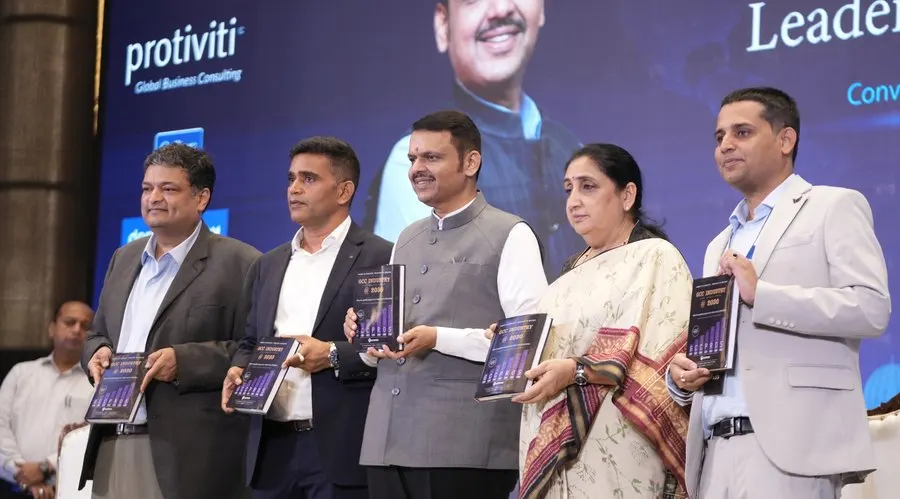
A practitioner’s outlook on where India’s GCC industry is headed: talent, technology, cities and operating models. It was unveiled on stage at the GCC Leadership Summit in Pune in August 2026, in the presence of the Chief Minister of Maharashtra. It can be ordered as a physical copy, and members read it in the browser.
Are the state GCC policy handbooks free?
The handbooks summarise each state’s GCC policy in plain English, without the legal drafting. Members of the research library read them in full in the browser.
Can I cite GCCPROs research?
Yes, with attribution. Cite the page and the date it carries, for example: GCCPROs, "How many GCCs are there in India?", 1 November 2026. Every figure is rebuilt from the live database nightly and carries the date shown.
Who writes the research?
The GCCPROs research team, working from the verified database. More about who we are.
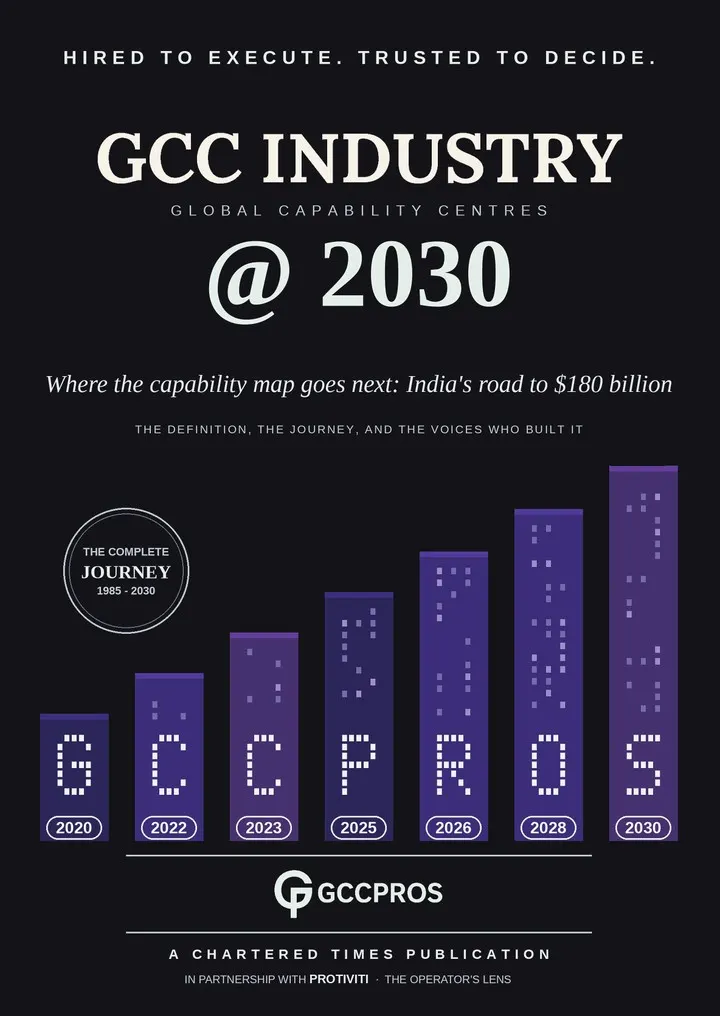
GCC Industry @ 2030.
A practitioner’s outlook on where India’s GCC ecosystem is headed, the forces reshaping talent, technology and location, and what leaders must do now to stay ahead.
- Grounded in the world’s most comprehensive GCC dataset
- Forward view to 2030: talent, AI, cities and operating models
- Written for GCC leaders, boards and new entrants
Dispatched within 3 working days. Secure payment via Razorpay.